

The safest way to chase an adrenaline rush is to read a captivating thriller book. These stories rely on one or more mysteries to ramp up tension, provoke intellectual curiosity, and deliver a sense of catharsis. Fiction is often a safe space to explore uncomfortable emotions, and thrillers deliver on this front by allowing readers to escape into worlds brimming with danger.
Take genre staples like Gone Girl or The Silent Patient. While the two couldn’t be more different in tone and subject matter, both thrillers heavily rely on misdirection and the recontextualization of events to deliver twists. These picks are a staple in every “must-read” list for good reason, just like the ones Polygon has highlighted below as genre essentials. Without further ado, here are eight thriller books you should read at least once in your life.
1 Conclave (2016) by Robert Harris
 Image: Polygon
The Oscar-winning Conclave was a surprising front-runner in a year dominated by flashier films like Anora and The Brutalist, and its source material is just as disarmingly good. The premise of a papal conclave held right after the pope’s death might feel a bit too somber, but Conclave unfolds like a tense political thriller that balances breakneck pacing with intricate detail. Jacopo Lomeli is tasked with the responsibility of overseeing the papal conclave in the event of the tragedy, and four cardinals are promptly chosen as leading candidates. But there’s more to the conspiracy than one would expect, turning the novel into a thrilling clash of ideologies that is also a deft exploration of inner conflict.
2 The Talented Mr. Ripley (1955) by Patricia Highsmith
 Image: Polygon
The Talented Mr. Ripley introduces us to Tom Ripley, famously played by Matt Damon in Anthony Minghella’s 1999 film adaptation and Andrew Scott in Netflix’s Ripley. Tom is struggling to make ends meet in New York, prompting him to carry out petty cons. When shipping magnate Herbert Greenleaf approaches Ripley to persuade his son, Dickie, to join the family business, the opportunistic young man readily agrees. Patricia Highsmith presents an unforgettable anti-hero, whose actions follow irrefutable internal logic despite being morally wrong. The novel is a fascinating character study about sociable forms of evil and how they manifest when you least expect it.
3 The Secret History (1992) by Donna Tartt
 Image: Polygon
A “whodunnit” framework propels most mystery thrillers, but The Secret History operates with a tense, slow-burn “why-done-it” narrative. The novel’s unreliable narrator, Richard Papen, immediately tells us about a murder, a crime for which he is “partly responsible.” This curiosity to understand the why and how makes this dark academia campus novel especially riveting. The novel’s secluded setting in Vermont adds to the isolation of the six tight-knit students at its center, whose obsession with all things Ancient Greece comes with a heavy price. Tartt’s characters are flawed, obnoxious, and compelling, successfully retaining our avid interest despite being deliberately disengaged from the world at large.
4 Dark Matter (2016) by Blake Crouch
 Image: Polygon
Blake Crouch has written engaging sci-fi books like Recursion and Upgrade, and Dark Matter leans heavily into sci-fi thriller territory with its propulsive pacing. The story follows physicist Jason Dessen, who is kidnapped and sent to a parallel universe, where his life plays out differently due to a drastically different choice he made in this timeline. In fact, this version of Jason has built a cube that enables travel between countless alternate worlds, which changes his understanding of quantum mechanics. Dark Matter is easily accessible for anyone, as its convoluted premise unfolds in a way that’s fun and easily digestible. This is undoubtedly popcorn entertainment, meant to be read while you’re waiting at the airport.
5 The Dead Zone (1979) by Stephen King
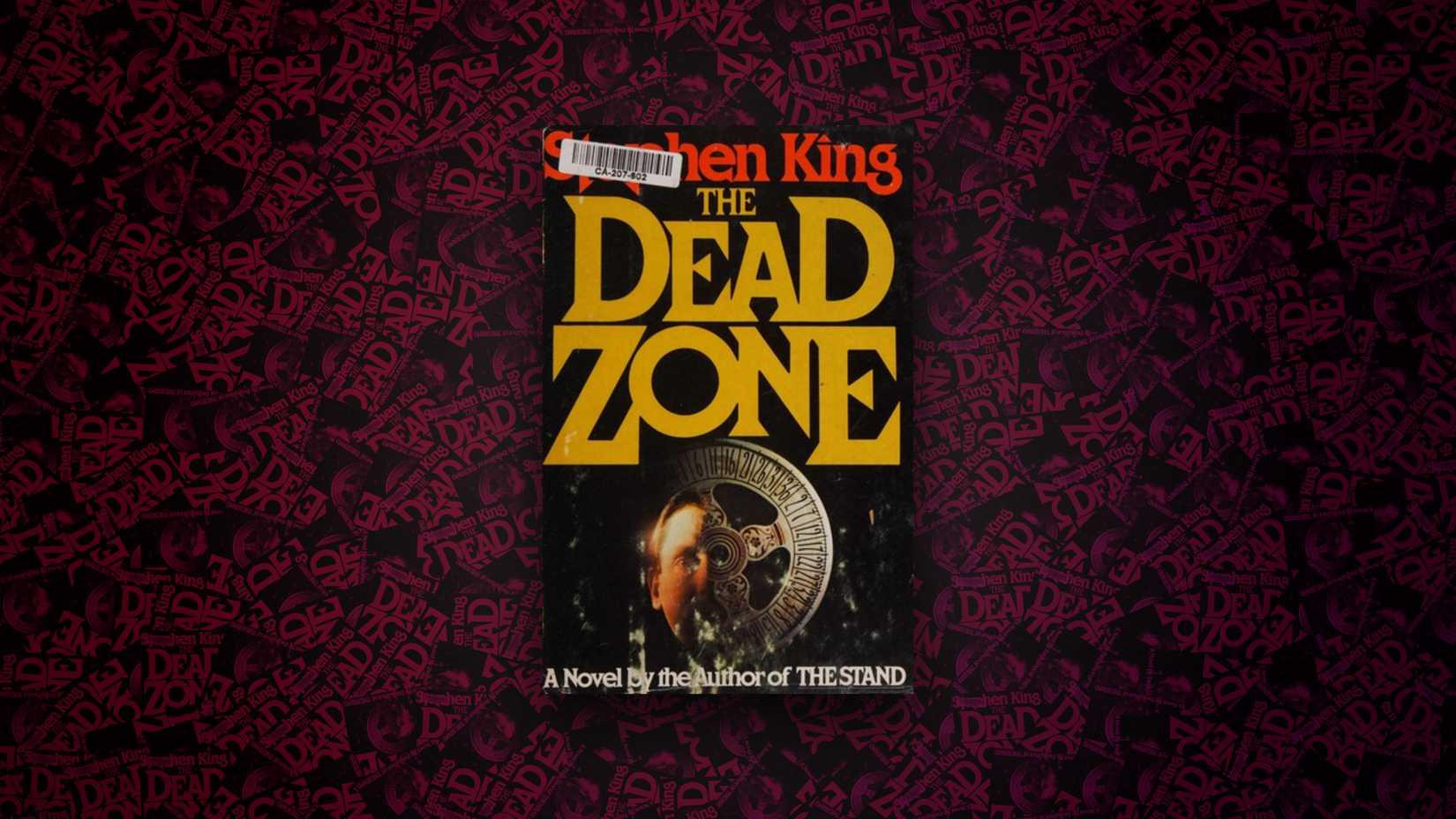 Image: Polygon
David Cronenberg’s adaptation of The Dead Zone is both a taut thriller and a quietly melancholic movie about a man with a strange gift. A child named Johnny Smith issues a prophetic warning after an ice-skating accident, and grows up to become a small-town high school teacher. Things take a turn after an accident-induced coma makes Johnny gain frighteningly accurate psychic abilities, along with a vision of the end of the world. Stephen King’s source material excels in conveying the eerie, lived-in horror of weighing extreme choices to determine the fate of those around us. Johnny’s predicament, although fantastical, feels deeply human in the way the personal and the political seamlessly blend together.
6 Rebecca (1938) by Daphne du Maurier
 Image: Polygon
A bona fide bestseller that has been adapted countless times on the screen, Rebecca is the definition of a Gothic novel with exceptional thriller elements. The book opens with an unnamed narrator lamenting that she cannot return to her husband’s estate, as it has been destroyed. Looking back, she recounts how she married the older, wealthy Maximilian de Winter, whose first wife, Rebecca, drowned in a sailing accident. Although the narrator does her best to acclimatize to her new life, every person at the estate seems haunted by Rebecca’s memory, to the point of undermining the new bride’s sense of self. Rebecca is a timeless classic about memory and identity, one that is also an exemplary entry in 20th-century Gothic fiction.
7 The Girl with the Dragon Tattoo (2008) by Stieg Larsson
 Image: Polygon
Stieg Larsson’s “Millennium Trilogy” is spectacular as a whole, but The Girl with the Dragon Tattoostands out for several reasons. The book introduces us to journalist Mikael Blomkvist, who is facing jail time after losing a libel case. Although Blomkvist retreats from the public eye, he takes an interest in a curious disappearance case after meeting Henrik Vanger, the CEO of Vanger Enterprises. Blomkvist, however, isn’t the only person involved, as the exceptionally gifted investigator Lisbeth Salander has been hired to evaluate his history and skill set. The novel is a labyrinth of clues, red herrings, and twists, along with a gritty exploration of abuse and institutional failure.
8 Mystic River (2001) by Dennis Lehane
 Image: Polygon
If you like the Oscar-winning neo-noir mystery, Mystic River, chances are that you’ll also like the book it is based on. Three boys — Dave, Sean, and Jimmy — grow up together in Boston. Tragedy strikes when Dave is abducted, and he returns after managing to escape, deeply traumatized. Fast-forward 25 years; the three men have been shaped by their respective circumstances, brought together by a grisly murder and the unsavory realization that one of them might be involved. Mystic River is a book that delves beneath the surface, compelling us to understand how grief carries on into adulthood. There’s immense thematic weight to this book about the tussle between choice and fatalism in the face of injustice.